




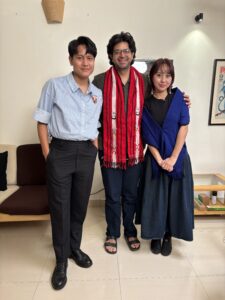
On a recent evening at PakPakPakao, the table was filled with the scents of smoked pork and fermented soybean (Axone), and I was joined by the heartbeat of Nagaland’s indie scene: Temsu Clover and Abdon Mech.
Both are master’s degree holders who chose the “singer” answer when their teachers asked what they wanted to be, a radical choice in a region where the “music industry” is still finding its feet. Their stories represent a massive shift in Indian pop culture: the moment when the “unexplored territories” of the Northeast stop asking for permission and start leading the conversation.
The “Church to Stage” Pipeline
Unlike artists in Tier 1 cities who cut their teeth in noisy pubs, Temsu and Abdon grew up in the church. In Nagaland, the church is the ultimate training ground. “You have a full band rehearsing three times a week and leading people into music every Sunday,” Abdon explained.
This creates artists who are technically disciplined and emotionally locked in. But there’s a catch: because Nagaland is a dry state, the traditional alcohol-brand sponsorship model doesn’t exist. This forces artists to be more resourceful, relying on local cafes and a hyper-loyal community.
The Missing Middle
The challenge for artists from places like Dimapur or Kohima is the “infrastructure gap.” You have small, intimate cafe gigs on one end and the massive, legendary Hornbill Festival on the other.
“We don’t have the next step,” Abdon told me. “You go from a cafe to a festival, and then you’re back down there.” There is no “middle ladder”, which is the mid-sized venues that help an artist scale their audience consistently.
This is where digital architecture becomes the equalizer. When physical venues are limited, your digital presence is your stadium.
Scaling Authenticity: Beyond the Stereotype
There’s a common misconception that Northeast artists are just “folk” or “tribal” acts. One look at Temsu’s quirky, “bipolar mind” aesthetic or Abdon’s John Mayer-esque songwriting proves otherwise. They are urban, fashionable, and globally relevant.
The beauty of the current Indian audience is that they don’t discriminate based on geography; they only care about connection. Temsu described how fans reach out to her for “therapeutic” conversations, while Abdon shared how he manually replies to thousands of DMs to build a 70% female-driven “super-fan” base.
From Dimapur to the World
The transition from a “local hero” to a “global artist” requires more than just good songs. It requires a bridge to the mainland and the global markets.
“I’ve spent a year being absent, and now that I’m back, there’s so much to learn,” I told them. My time at Google and YouTube taught me that while the platforms are huge, they are not opaque. There is a strategy to breaking out. Whether it’s using YouTube Memberships to monetize that “therapeutic” fan connection or building a tour plan that makes economic sense outside of your home state, the tools are there.
I believe there has never been a better time to be an artist from the Northeast. The world is hungry for stories that feel real, and Nagaland has those in spades.
If you’re an artist from an “unexplored” territory and you feel like you’ve hit a ceiling, let’s talk about building the architecture to break through it. I’ve spent a decade managing artist relations at the highest level, and I know how to translate your local soul into a global strategy.
Schedule a consultation session here.
Let’s turn your home-grown dream into a global reality.
Saransh Kharbanda spent 13 years at Google and YouTube managing artist relations. He now consults for artists who want to stay independent without being invisible.