




For an Indian artist, international exposure is often treated as a marker of success.
A tour in Europe. A festival in the US. A release with an international label. These are all useful milestones, but the more interesting question is what happens after an artist gets there.
Does playing outside India change the way an artist thinks about their music? Does it change how they approach their audience, their live shows or even their career?
My conversation with Gutslit on Pak Pak Pakao offered an interesting answer.
For the death metal band, international exposure was not simply about playing bigger shows. Touring gave them a wider view of what was possible for an Indian band and exposed them to different artists, audiences and approaches to making music.
That can be more valuable than the tour itself.
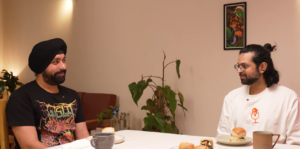
International touring can change how artists see themselves
Gutslit began getting international exposure relatively early in its journey. Playing outside India put the band into a different musical ecosystem, where they could see how other artists approached their genre and how audiences responded to it.
That matters as an artist’s understanding of their own career is often shaped by the ecosystem around them. If your reference points are only the venues, audiences and artists you see at home, it is easy to mistake those boundaries for the limits of your career.
International exposure can change that.
The band later experienced the European festival circuit, including Obscene Extreme in the Czech Republic. Being surrounded by dozens of international acts gave them a chance to see different sounds, performances and approaches to extreme music.
The road became an education.
International exposure can influence the music itself
One of the more interesting points from the conversation was how touring influenced Gutslit’s creative thinking.
By the time they were working towards their second album, Amputheatre, the band had already experienced international festivals and audiences. Seeing established musicians perform and watching how European audiences engaged with metal gave them new references for their own music, themes and concepts.
That is an important distinction.
International exposure does not automatically make an Indian artist more “global” simply because they have performed abroad. Its real value can be in what the artist brings home.
New references. New ideas. Different standards. A better understanding of where their music fits.
After touring, Gutslit could return to the studio with those experiences in the background. The international market was no longer an abstract idea. They had actually seen it.
An international audience can develop before an international tour
There is another lesson here for Indian artists building careers in the streaming era.
An artist does not necessarily need to start with a large international tour to build an international audience. Digital platforms can create discovery long before a band physically reaches a particular country.
Gutslit’s experience is a good example of how those two things can eventually work together.
Their music found listeners outside India through digital platforms and their work with Transcending Obscurity. Touring then gave that music a physical presence. Festivals created opportunities to meet new audiences, musicians and industry professionals.
The two sides reinforce each other.
Streaming creates discovery. Touring creates context. Festivals create networks.
For artist managers, that distinction is important. An international audience is not the same thing as an international touring market.
Going global is not the same as having a global career
Gutslit’s experience also shows why international expansion needs to be approached strategically.
An artist can have listeners in a country without necessarily having a viable touring market there. Ticket buyers, promoters, festivals, visas, travel costs, local partners and audience concentration all matter.

The US is a useful example. Gutslit discussed having a significant share of its audience there while also pointing to the practical difficulties of touring the country, particularly around visas and costs.
That gap between where people listen to you and where you can realistically perform is something artists and managers need to understand.
Streaming data can tell you where your audience is. It cannot, by itself, tell you where your career should go next.
What Indian artists can learn from international exposure
The lesson from Gutslit is not that every Indian artist needs to immediately book a European tour.
It is that international exposure can be valuable when it changes how an artist thinks.
It can introduce new creative references. It can build relationships with promoters, labels and other musicians. It can expose artists to audiences that already understand their genre.
Most importantly, it can change their sense of what is possible.
For Indian artists, going international should therefore be about more than adding countries to a tour poster. The real opportunity is to take those experiences and use them to make better music, build stronger positioning and understand where an audience can exist.
The global music market is not one market. It is a collection of scenes, platforms, audiences and networks that increasingly overlap.
Indian artists do not necessarily have to wait for those markets to discover them.
They can start building those connections themselves.