




There was a time when discovering music required effort.
You waited for a song on the radio. You borrowed a cassette from a friend. You heard something on television and then tried to figure out who had made it.
Today, a song is seconds away. Streaming platforms can recommend thousands of tracks, while artists can release music directly to a global audience.
Technology has made music easier to access than ever. But listening to Raghu Dixit talk about discovering music through radio and cassettes raises an interesting question: what did we lose when music discovery became effortless?
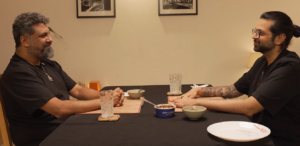
When discovering a song was an event
Raghu remembers hearing Phil Collins’ “Another Day in Paradise” on The World This Week, during a segment around the Grammy Awards.
There was no Shazam. No Spotify search bar. No YouTube recommendation.
If you wanted to know what you had just heard, you had to find out.
Cassettes created a similar kind of friction. Raghu recalls a college culture where people paid to listen to someone else’s cassette, traded tapes or borrowed them for a limited period.
Music was not infinitely available.
You had to find somebody who owned it. You had to choose what you wanted to hear. And that limitation could make discovery feel significant.
Radio was a cultural filter
Radio played another role.
Raghu remembers listening to it regularly while travelling to and from work, eventually hearing his own music on Radio City. He also recalls creating a Kannada-English jingle for Spice Telecom that became popular enough for listeners to call radio stations requesting it.
Radio did not give artists instant analytics.
It gave them something different: shared attention.
When a song was played on air, thousands of people could encounter it at the same time. A radio programmer, presenter or listener request could determine what entered the cultural conversation.
Today, that role is increasingly played by recommendation systems.
The middleman has not disappeared. The middleman has changed.
The algorithm is the new gatekeeper
Streaming and social platforms have removed many barriers for independent artists. An artist can record at home, distribute globally and find listeners without waiting for a radio station or record label.
But discovery still needs a filter.
Instead of a radio programmer deciding what gets played, an algorithm can decide what appears in your feed or playlist.
Raghu’s story makes this transition particularly interesting because his early career depended on physical recordings, newspapers, radio and people passing his music from one place to another.
Today, much of that journey can happen through a link.
Everything is faster.
But faster does not always mean more memorable.
What did we gain and what did we lose?
It is easy to romanticise the cassette era. The old system was restrictive. Access depended on money, geography, physical collections and personal networks.
Technology has removed many of those barriers, and that is a good thing.
But scarcity created attention.
When you had limited access to music, choosing what to hear mattered. When you waited for a particular radio programme, you actually waited. When somebody gave you a cassette, there was a person and a story attached to that music.
Today, we have almost unlimited access.
The challenge is getting someone to stop scrolling long enough to listen.
Music discovery keeps changing
Raghu’s story is not really about cassettes or radio. It is about how people find music.
Cassettes became CDs. CDs became downloads. Downloads became streaming. Radio became digital. Social platforms became discovery engines. Algorithms became increasingly important to what listeners encounter.
The technology keeps changing.
The basic human experience does not.
Someone hears a song they like. They want to know more. They tell someone else. An artist finds an audience.
The tools have become faster. The journey has become shorter.
But perhaps that is why the old stories still matter.
Before music became instantly accessible, discovering a song was sometimes a journey in itself.
And that journey was part of what made it memorable.