




There is a particular kind of sentence that sounds inspiring when you hear it in retrospect.
“I quit my job to become a musician.”
Once the musician has an audience, albums, tours and years of work behind them, the decision can start to look inevitable. Almost like the person was always supposed to leave.
The reality is usually less cinematic.
For many artists, leaving a stable career means giving up a predictable salary, a familiar routine and a version of success that is easy to explain to other people. What replaces it is uncertainty. Sometimes there is an audience. Sometimes there are three people in the room.
Raghu Dixit and Aabha Hanjura have both lived through versions of this transition. Their paths are very different, but their stories point towards the same question: what happens when music stops being the thing you do alongside your career and becomes the career itself?
That question also sits at the heart of a much larger conversation about creative careers in India.
This is the first in a series of stories looking at people who made that transition. Over the coming pieces, we will return to other musicians who walked away from more conventional careers, look at what pushed them towards music, what happened after they made the jump, and what the decision actually demanded of them.
We will also look at the experience from another angle: Saransh Kharbanda’s own decision to leave his career and build something of his own.
Because there is no single way to leave a career behind. There are different reasons, different risks and very different versions of what comes next.
For now, it starts with two musicians.
The corporate job was not necessarily the problem
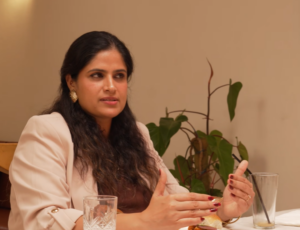
Abha describes leaving a steady corporate career and a good salary for music. At the time, she was not simply moving from one secure job to another. She was moving towards a career where she did not know what the next few years would look like.
She describes it as choosing a path filled with uncertainty. The financial reality arrived quickly. Her savings went into working on her first album, and at 25 she found herself broke while trying to figure out how to make the music work.
That is an important distinction.
Leaving corporate life for music is not necessarily an argument against corporate work. It is an argument about what someone wants their working life to be organised around.
For Aabha, the answer increasingly became performance.
She describes herself first as a live performer, then a songwriter, singer and composer. The stage is where she says she feels at home, and that connection eventually became strong enough to justify the uncertainty that came with making music professionally.
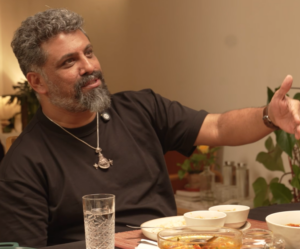
Raghu Dixit quit, then discovered how hard quitting actually was
Raghu’s transition was not one clean leap from corporate employee to successful musician.
He had already experienced the satisfaction of music through performances and competitions. By his mid-twenties, music had become increasingly obsessive. He eventually left a company that had sent him to Belgium and returned to India with the intention of becoming a rock star.
Then reality arrived.
His savings disappeared. Record labels were not interested in his demo. Meetings were difficult to get. Eventually, he took a job as a technical writer at a software company, which gave him enough stability to continue working on music during weekends.
This is the part of the music career story that often gets removed when we tell it later.
The leap does not always work immediately.
Sometimes you quit.
Then you need a job.
Then you keep making music.
Then you quit again.
Raghu eventually walked into Radio City and pursued another opportunity after his music began getting attention on the station. His story was not about having complete certainty before making the decision. It was about repeatedly creating enough space for music to become possible.
The first few years can look nothing like the dream
Aabha’s experience captures another uncomfortable part of the transition.
After leaving corporate life, she had to put her savings into her first album. The early work involved finding musicians, sourcing unusual instruments, producing shows and figuring out how to survive through performances.
At one point, after months of preparation for a show, only three people turned up.
She had done everything herself. The show was ready. The musicians were ready. The costumes were ready.
And there were three people in the audience.
For a moment, the obvious question appeared: I left my corporate career for this?
Her bandmate Sanjay gave her a different way of looking at it. Three people still meant three people. They deserved the same performance as a stadium audience.
So they played.
That became one of the most important lessons of her early career. A few years later, she was performing for thousands. But the journey between three people and 5,000 people was not linear.
That matters because careers in music rarely provide the immediate feedback that corporate careers do.
A promotion tells you something.
A salary tells you something.
A job title tells you something.
A three-person concert does not necessarily tell you whether you made the right decision.

Music becomes a job long before it becomes financially secure
There is another misconception about leaving corporate life for music.
The alternative to a corporate job is not simply making music all day.
The music is only one part of the job.
An independent artist may have to organise shows, pay musicians, rehearse, produce, market, create content, communicate with audiences, manage releases and figure out where the next cheque is coming from.
Aabha describes having to take on audience building and marketing herself after previously having outside support. She says it is one of the parts of the job she enjoys least, particularly around a release, when artists suddenly have to think about content and the algorithm alongside the music itself.
That is the irony of independence.
You gain control over the work, but you also inherit the work that somebody else used to do.
The corporate career had its own constraints. Independent music has different ones.
Raghu’s second career taught him something about risk
Raghu’s own corporate experience gives this question another dimension.
He spent years working in a comfortable corporate environment. In the conversation, he describes having spent 13 years in a corporate job and being at the forefront of a major platform, surrounded by people and opportunities within the industry.
From the outside, there was little obvious reason to walk away.
But he describes something eating away at him.
His response was not immediately another job or another business plan. He went on a 10,000-kilometre solo road trip across India.
For days, he spent hours alone on the road. Eventually, the absence of the usual noise gave him something he had not experienced in a long time: the chance to listen to himself without having to sell a platform, follow a script or perform a professional role.
That is a useful way of thinking about career transitions.
Sometimes the decision does not begin with a grand plan.
It begins with noticing that the life you have built no longer sounds like your own.
The real risk is not just financial
The financial risk of leaving a corporate job is obvious.
The less obvious risk is identity.
A corporate career gives you a professional identity that other people understand. You can tell your parents what you do. You can explain your job at a family dinner. There is a number attached to your salary and a title attached to your LinkedIn profile.
Music removes much of that certainty.
Raghu experienced this when he left his job and struggled to get labels to even take a meeting. Aabha experienced it when her savings went into an album and early shows could have tiny audiences.
Neither story suggests that uncertainty magically disappears once the decision is made.
It becomes part of the job.
But the point is not to romanticise quitting
There is a tendency to turn stories like these into motivational content.
Quit your job.
Follow your passion.
Take the risk.
The problem is that this removes almost everything interesting from the actual story.
Neither Raghu nor Aabha simply quit and immediately succeeded.
There were savings that disappeared. Jobs that returned. Small audiences. Failed experiments. Survival gigs. Years of work. Repeated decisions to keep going.
Raghu’s first attempt after quitting his corporate job did not produce instant success. He eventually needed another job while continuing to develop his music. Aabha’s early years involved doing almost everything herself and learning how to survive as a performer.
The lesson is therefore not that everyone should leave their corporate career.
It is that a career in music has to be treated as a real career.
What changes when music becomes the work?
The most interesting part of both stories is what happens after the decision.
Music stops being an escape from work.
It becomes work.
That means the artist has to deal with money, audiences, logistics, marketing, failure and repetition. The romantic version of the musician disappears fairly quickly.
What remains is the person who still wants to perform after the difficult show.
For Aabha, that connection is the stage. She describes performing as something that continues to fuel her even after exhausting months on the road.
For Raghu, the meaning of performing has evolved over time. His story moves beyond simply chasing fame or the idea of becoming a star, towards wanting his songs to give people something to hold on to during difficult moments.
That shift matters.
Because once the external markers become unreliable, the reason for doing the work has to become stronger.
The career after the career
Perhaps the most useful way to look at leaving corporate life for music is not as a dramatic career change.
It is as a redistribution of risk.
In a corporate job, some risks are absorbed by the organisation. Your salary arrives whether 500 people or three people like the work you did that week.
As an independent musician, the risk moves closer to you.
If the show does not sell, you feel it.
If the release does not travel, you feel it.
If the audience takes years to build, you live through those years.
But so does the reward.
When the work succeeds, there is a much more direct relationship between the person who made the decision and the life that decision created.
Raghu went from leaving a corporate career, running out of savings and taking another job to eventually building a career around live performance and songwriting. Aabha went from a steady corporate career to investing her savings, building shows and developing herself as an independent artist.
Neither journey was predictable.
That may be the point.
A career in music does not necessarily begin when someone becomes successful enough to call themselves a musician.
Sometimes it begins when someone decides that the uncertainty of trying is preferable to the certainty of wondering what might have happened.
And then, unlike the clean ending of a resignation letter, the real work begins.
This is only the beginning of that conversation.
In the next pieces in this series, we will look at more musicians who made similar decisions, what they left behind, what they found on the other side, and how those choices shaped the careers they eventually built.
We will also turn the lens towards Saransh himself and the decision to leave a conventional career and start building a company of his own.
Because sometimes the most interesting career stories are not about where people ended up.
They are about the moment they decided to leave.