




Why Band Merchandise Is More Than a T-Shirt
For many independent artists, merchandise starts with a simple question: what can we sell to fans?
A better question is: what can merchandise do for the artist?

It can generate revenue, strengthen an artist’s visual identity and give fans something tangible to take home. More importantly, it can turn a listener into part of a community.
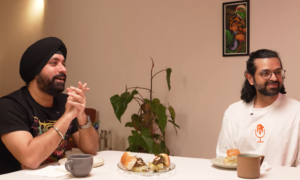
That was one of the more interesting conversations I had with Gutslit on Pak Pak Pakao.
The death metal band has approached merchandise as more than a logo printed on a T-shirt. Their merch is an extension of the band’s music, humour, artwork and personality.
That distinction matters.
Merchandise is part of an artist’s brand
Gutslit’s visual identity has always been closely connected to the band.
In our conversation, they spoke about building a library of artwork and experimenting with designs that could exist beyond the music itself. One example was their unicorn design, which combined a unicorn with chainsaw imagery and went on to become one of their best-selling designs.
The interesting part isn’t really the unicorn.
It is how the idea came about.
It started as an idea within the band, became artwork and eventually turned into something fans wanted to buy and wear.
That is when merchandise becomes useful as a branding tool. It stops being promotional material and becomes part of the artist’s world.
The best band merch gives people a reason to wear it
There is a difference between a T-shirt that advertises a band and one that someone genuinely wants to wear.
Gutslit understood that distinction.
Some of their designs draw from things outside the immediate world of metal. A Japan-related design might bring in Godzilla and a unicorn. Other designs can reference places they have visited while touring.
That gives the merchandise another layer.
You don’t necessarily need to be a hardcore Gutslit fan to appreciate the design.
For independent artists, this is an important lesson. Merchandise does not always have to explain who you are. Sometimes it can simply create a visual world that people want to be part of.
International touring changed how Gutslit approached merch
Gutslit’s approach to merchandise was also influenced by seeing how international bands handled it.
Touring exposed them to different ways of designing, producing and selling merchandise. But they did not simply copy what they saw.
Quality became one of their priorities.
The band spoke about seeing international acts use cheaper, thinner T-shirts that would eventually wear out and need replacing. Their approach was different. If they were going to sell a T-shirt, they wanted it to be good enough for the band members themselves to wear.
That meant paying attention to the blank, printing and overall finish.
It also meant accepting that some experiments would not work.
Samples were made, designs were tested, some were rejected. Money was spent on products that ultimately did not make it to the final collection.
That might look inefficient on a spreadsheet.
For a band trying to build a long-term brand, it can make sense.
Good merchandise can build community
This is where merch becomes much more interesting than a revenue stream.
Gutslit spoke about seeing people at festivals still wearing their shirts years after buying them.
The sale may have happened four or five years ago. The connection with the band is still visible.
Someone wears the shirt to a gig, another person recognises it, then someone asks about the design, and a conversation starts.
The merchandise has travelled further than the original sale.
That is community building.
In our conversation, artist management was also discussed in terms of building a community around an artist. Consistency in music, branding and how an artist presents themselves can eventually create super fans, and those super fans are often the people who buy merchandise and tickets.
Merchandise is one physical expression of that relationship.
Merch should be part of the artist strategy
Artists often think about music, social media, live shows and merchandise as separate parts of their career.
They work better when they connect.
The music establishes the identity. Live shows create an experience. Social media keeps that identity active. Merchandise gives fans something physical through which they can participate.
For an independent artist, that does not necessarily mean producing dozens of products.
A limited tour T-shirt might be enough. So could a city-specific design, an album-related collection or a collaboration with another artist.
The important thing is to start with the artist, not the product.
What does this artist stand for? What would their fans actually want to wear? What part of their world can exist outside the music?
Those are better questions than simply asking what will sell.
The opportunity for Indian independent artists
Merchandise is still often treated as an afterthought by independent artists in India.
That creates an opportunity.
Artists do not need a huge catalogue of products. They need products that feel connected to the identity they are building.
Gutslit’s experience is a useful case study because the merchandise comes from the same place as the music: experimentation, strong opinions, distinctive artwork and an understanding of the audience.
The business opportunity is real.
But the bigger opportunity is cultural.
When someone wears an artist’s merchandise for years, they are not just carrying a logo.
They are carrying a piece of that artist’s world.
And for an independent musician, that can be one of the most effective ways to turn an audience into a community.