




Being an independent artist sounds simple from the outside.
You make your own music. You decide what you want to say. You control your releases. There is no label executive sitting across the table telling you what the next single should sound like.
The reality is much less straightforward.
An independent artist in 2026 is not only expected to make good music. They are also expected to understand platforms, create content, build an audience, plan releases, manage collaborators, organise shows and keep up with an algorithm that can change before the next song is even finished.
For artists who choose independence, creative freedom comes with a much longer list of responsibilities.
Aabha Hanjura’s experience offers a useful way to understand what that actually looks like.
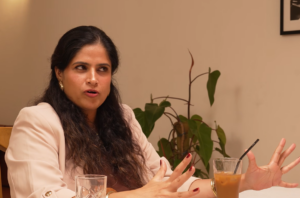
Being an Independent Artist Means Doing More Than Making Music
For Aabha, becoming more independent was not necessarily part of some grand plan.
At one point, she had support with parts of her career. When that changed, she found herself having to take responsibility for things she had previously been able to hand over to someone else.
That included marketing and audience building.
She does not particularly enjoy that side of the job. Making music is the part she wants to spend her time on. But once a release approaches, there is suddenly content to make, platforms to think about and an audience to reach.
That is one of the realities of being an independent artist today.
The music is only one part of the work.
The rest is everything that allows people to find it.
The Algorithm Is Now Part of the Job
Music discovery has changed dramatically.
An artist can spend six months writing and recording a song, only to find that getting people to listen to it requires a completely different kind of work. Short-form content, release strategy and platform behaviour have become part of the conversation around music.
Abha points to a larger change in how people consume music. There are increasingly moments of songs that travel across platforms, rather than necessarily people sitting down to listen to an entire track from beginning to end.
For an independent artist, this creates a difficult balance.
You have to understand the system without allowing the system to completely dictate what you create.
That distinction matters.
Algorithms change. Platforms change. The formats change. What worked six months ago may not work today.
The artist still has to make the next song.
Creative Control Comes With Creative Responsibility
There is another reason artists choose independence: control.
Aabha describes that as a conscious choice. As a songwriter and independent artist, she wanted a degree of control over the kind of artist she wanted to be.
That freedom is valuable. But it also comes with responsibility.
If you have more control over the music, you also have to make more decisions around it.
What gets released? When does it come out? How is it presented? How much time goes into promotion? Which opportunities make sense? What should be handled yourself and what should be delegated?
Independence does not remove these decisions.
It puts more of them in front of the artist.
This is where the modern independent music career becomes different from the old idea of simply being an artist without a label. Independence is increasingly about managing the entire ecosystem around the music.
Building an Audience Without Losing Yourself
There is a temptation to think of audience building as a numbers game.
Followers. Streams. Views. Engagement.
But for an artist, those numbers do not always explain why people actually connect with the music.
Abha’s experience shows another side of it.
Over the years, she has received messages from people who discovered her music during difficult periods of their lives. Some have told her that seeing her perform changed what they thought was possible for them.
Those interactions are difficult to measure through a dashboard.
They also explain why audience building cannot simply mean chasing reach.
The goal is to find the people for whom the work actually means something.
That can take years.
What Three People in an Audience Can Teach You
One of the most revealing stories from Aabha’s journey happened at a show where almost nobody turned up.
There were three people in the audience.
Instead of treating the show as a failure, her band decided to play as if the room were full. The lesson stayed with her: the quality of the performance could not depend entirely on how many people were standing in front of the stage.
Years later, she found herself performing for thousands of people.
The contrast is striking, but the important part is that the approach had not changed.
The three-person show had taught her something that the larger shows could not. The work had to mean something to the artist before it could mean something to an audience.
For an independent artist, that becomes particularly important.
There will be releases that do not travel as far as expected. Shows that are smaller than expected. Songs that take months to make and receive less attention than a piece of content that took a few hours.
External validation is inconsistent.
The practice of making the work has to be more stable than that.
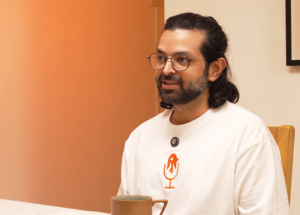
The Hardest Part Is Staying Sustainable
There is another side to independence that gets less attention.
The workload can become overwhelming.
Aabha describes maintaining her mental health as one of the hardest parts of being an independent artist. The constant movement between writing, performing, promoting and managing the practical side of a career can make it difficult to protect time for the thing that started the whole process: making music.
Her experience of becoming a mother also changed the way she approached work. She became more conscious of time and more efficient with the hours available to her.
That is an important part of the conversation around independent artists.
Independence is not just about doing everything yourself.
It is also about figuring out what deserves your time, what can be delegated and what you cannot afford to let consume you.
What Does It Take to be an Independent Artist in 2026?
It means having more control, but also more responsibility.
It means understanding that making the music is only one part of building a music career.
It means learning how platforms work without letting platforms decide who you are. It means building an audience without reducing your relationship with listeners to follower counts. It means accepting that some parts of the job will never be as enjoyable as writing a song, and doing them anyway.
Most importantly, it means having a reason to keep making the work when the numbers are not immediately there.
The music industry will continue to change. The platforms will change with it. The formats will change again.
The independent artist has to change too.
But the core question remains much the same: can you keep making work that feels like yours while figuring out how to get it in front of the people who need to hear it?
That is what independence looks like in 2026.