




The “Rick Rubin” Gap: What Multidimensional Artists Can Learn from Suryakant Sawhney
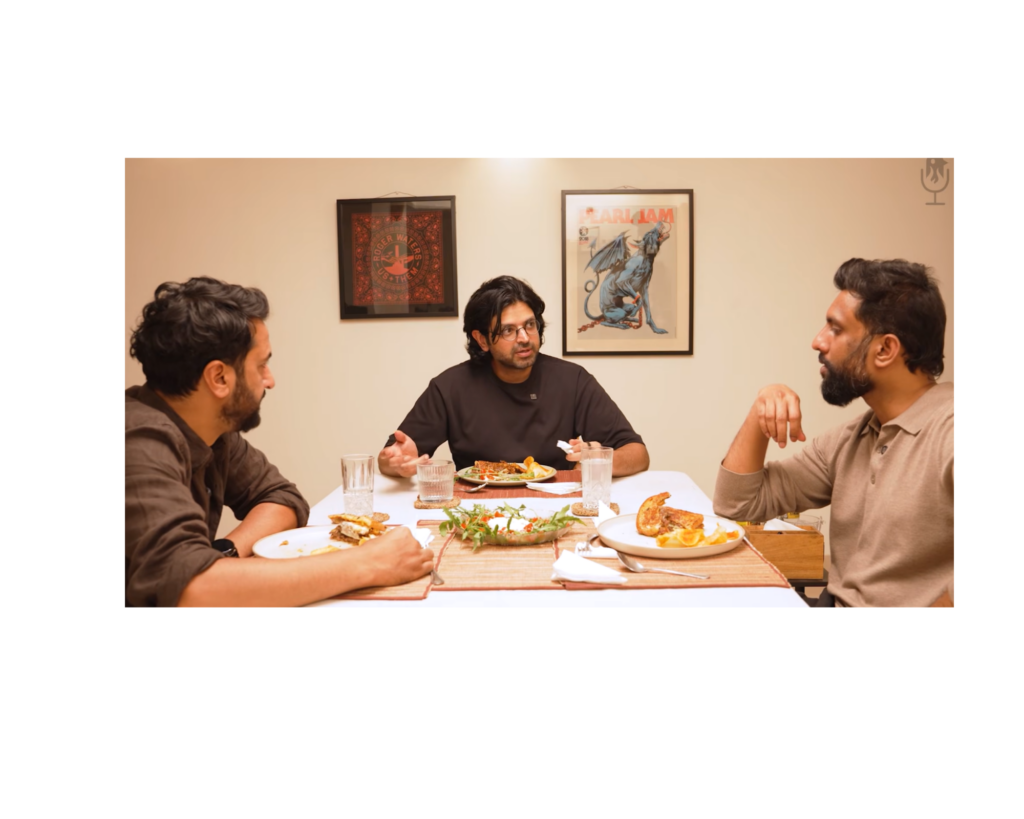
In the latest session of my “victimization” supper club, I served up Amritsari Fish and Mangalorean Pomfret to a man I’ve looked up to for years: Suryakant Sawhney.
Whether you know him as the voice behind Peter Cat Recording Company or the electronic visionary Lifafa, Suryakant represents the ultimate “multidimensional artist.” He’s a filmmaker, a 3D animator, and a songwriter who switches between English formality and the raw vulnerability of Hindustani as easily as I switch between cooking techniques.
But as we discussed his journey—from being “broke and breaking piggy banks” in 2019 to touring the world today—it became clear that even the most brilliant creators struggle with the same two things: Discipline and Direction.
The “Conveyor Belt” of Ideas
Suryakant described his mind as a “non-stop conveyor belt of song ideas.” It sounds like a dream, but for an artist, it can be a nightmare. Without a structure, those ideas often stay “marinated” in the head and never reach the listener.
He admitted to having what he calls the “worst work ethic,” often spending years destroying and recreating a single track. “I’m looking for a Rick Rubenesque figure,” he told me. “Someone to step in and say, ‘Suran, this song is ready. Put it out.'”
This is the gap I’ve spent 13 years at Google and YouTube learning how to fill. Many artists believe they need more “inspiration,” but what they actually need is an Institutionalized Process. They need a sounding board that understands the “Delhi Depression” of the creative soul but speaks the language of the global DSP (Digital Service Provider).
Manipulating History: The New Tech Frontier
One of the most fascinating parts of our chat was how Suryakant uses AI. He isn’t using it to write lyrics; he uses it for Stem Separation.
He’s taking old, raw recordings from a decade ago—stuff with “youthful impulsivity”—and using AI to strip out the badly recorded drums or vocals so he can re-record them with his current, more mature ability. He calls it “the manipulation of history.”
For the young artist, this is a masterclass in Technical Leverage. You don’t need a million-dollar studio to sound world-class anymore; you need to know which tools actually serve your art and which ones are just “shitting out a PDF with errors,” as ChatGPT sometimes does.
The Identity Paradox: “Bhikari Chic” to Global Stage
Suryakant’s style has been called “Bhikari Chic”—a kind of homeless stylishness that matches his “genre-fluid” music. He struggled for years with the identity of being an English-educated Indian making Western-influenced music, until he found the patriotic, sensual soul of Lifafa.
Today’s artist can’t just be one thing. You are expected to have “eras.” You are expected to be a filmmaker (like Suryakant’s work with Miya Biwi) as much as a musician. But managing that multidimensionality is exhausting.
Bridging the Gap
As we sat over dessert, I realized that my role in the music ecosystem is often being that missing link: a sounding board with Knowledge-Backed Honesty.
When I was at YouTube, I wasn’t just a “postman” for metadata; I was analyzing 10,000 channels to find the patterns of what works. I’ve seen why some artists go viral and why others, who are arguably more talented, remain stuck in their “head-music” for years because they lack the right digital architecture.
If you are a multidimensional artist navigating these complexities, you don’t have to struggle in the dark. Whether it’s protecting your masterpieces from being buried by an algorithm, exploring fan-funded models like YouTube Memberships, or simply knowing when a project is “ready” to ship, having an outside perspective can be the difference between a local niche and a global career.
I help creators translate their creative chaos into strategic momentum. If you’re looking for someone to help demystify the platforms or provide the clarity your project needs to move forward, let’s chat.
[Schedule a consultation session here]
Let’s turn your “head-music” into a global reality.
Saransh Kharbanda spent 13 years at Google and YouTube managing artist relations. He now consults for artists who want to stay independent without being invisible.