




India has no shortage of women making music. The harder question is why so few of them have been able to build the kind of large, recognisable pop careers that exist in other markets.
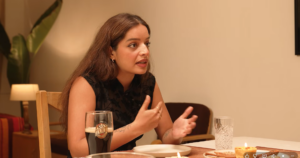
That question came up when I recently sat down with Lisa Mishra on PakPakPakao. We were talking about the difference between being a woman in music and actually having women represented throughout the process of making, releasing and building an audience around music.
Lisa put the problem into two broad categories.
The first is access.
She spoke about resources, access to the right rooms and the barriers that can appear even after an artist has managed to get through the first few doors. Her point was that telling women to simply “make more music” or “be more visible” misses the reality of the situation. If an artist is under-resourced, isn’t welcomed into certain spaces, or doesn’t have people in positions of influence who understand her experience, working harder does not necessarily solve the problem.
That is particularly important when we talk about the idea of India’s “first bonafide female pop star”. Lisa made a distinction between a pop star and a playback singer. In her view, the difference is partly about authorship. Who is writing the material? Who is making the creative decisions? Who is involved throughout the process rather than simply performing a song written and produced by someone else?
That distinction changes the conversation.
Because India has had hugely successful women singers for decades. What we have not yet seen at the same scale is a woman whose identity, songwriting, sound, image and audience all come together to create the kind of pop-star ecosystem that we see around artists such as Taylor Swift, Beyoncé or Rihanna.
The second part of Lisa’s argument was even more interesting.
She questioned the relationship between women artists and women audiences. In global pop, some of the strongest fandoms around major female artists are built largely by women and LGBTQ+ listeners. Lisa used Taylor Swift as an example, pointing to the sense of recognition and community that comes from hearing an artist tell stories that reflect your own experiences.
Her argument was that India has a deeper cultural problem here. If women are not encouraged to have their opinions heard at home, to make decisions or to see their own experiences treated as important, it can affect how easily they connect with another woman’s story later in life.
It is a difficult argument, and Lisa herself described it as a cultural undertaking rather than something the music industry can fix on its own.
But there is something worth examining in it.
She spoke about seeing women enthusiastically support male artists while finding it harder to get the same audiences to attend shows by women artists. She also described herself as one of the lucky few because she was initially positioned as an artist “for the girls”. That association came through her work around Veere Di Wedding, a film led by women, but she felt that over time those audiences did not necessarily convert into audiences for her own shows.
That raises an uncomfortable question for the industry.
Are we asking women artists to build audiences in an environment where those audiences have not yet been taught to see themselves in women artists?
And if the answer is yes, then simply telling an artist to post more, release more and “build community” is not enough.
There is also reason to be optimistic. The wider Indian music ecosystem is changing. Streaming has made it easier for audiences to discover music outside the traditional film system, and independent and regional artists are finding audiences that would have been much harder to reach through the old gatekeepers. But discovery is only one part of building a career.
The next step is creating artists whose audiences don’t just listen to them. They see themselves in them.
That is where representation becomes more than a conversation about numbers. It becomes about what kind of careers young artists can imagine for themselves.
If a young woman growing up in India can look at another Indian woman and think, “I want to do that”, the industry has already changed.
The question is how long it takes us to get there.